



“sources like The National indicating Egypt’s conditional openness to supporting Ethiopia’s legitimate quest for diversified Red Sea access in exchange for flexibility on Nile matters—illustrate that pragmatic incentives are already emerging. While these proposals come with conditions and have sparked necessary debate in Addis Ababa and beyond, they highlight a shared recognition: prolonged standoffs serve neither side, but calibrated cooperation can unlock mutual advantages in an increasingly interconnected region“
By Tesfaye Kebede Ali, February 25| 2026| Addis Ababa -Ethiopia | OPINION
As someone deeply engaged with the complexities of the Nile dispute—from both a technical water resources perspective and the lived realities in the Horn of Africa—the path to a lasting, equitable agreement on the shared waters of the Nile does not lie in endlessly replaying historical grievances, colonial-era treaties, or amplifying the mutual fears that have shadowed relations for centuries. Instead, it demands a deliberate pivot toward a renewed spirit of genuine brotherhood, mutual respect, and pragmatic cooperation between Ethiopia and Egypt—two ancient civilizations whose fates have been intertwined by this mighty river since time immemorial.

The Nile is not merely a resource to be divided; it is a living, interconnected lifeline that flows from the Ethiopian highlands – where approximately 86% of the Blue Nile’s vital waters originate – through Sudan and into Egypt’s arid heartland. This hydrological reality underscores an undeniable truth: the river’s abundant potential can only be fully realized when managed as a unified, basin-wide system rather than as fragmented, zero-sum national claims. Technical assessments consistently show that the Nile’s average annual flow (around 84–90 billion cubic meters at Aswan, with variations due to climate) holds sufficient volume to support the reasonable developmental aspirations of upstream riparians like Ethiopia while safeguarding Egypt’s existential dependence on the river for over 95% of its freshwater needs.
By centering negotiations on shared engineering solutions and optimized basin-wide management, both nations can move beyond confrontation toward complementary gains. This approach transforms the Nile from a perennial source of tension into a powerful foundation for joint prosperity, regional stability, and even economic integration. Ethiopia gains energy security and sustainable development; Egypt secures reliable, enhanced water availability through smarter management rather than unilateral control; and the broader Nile Basin benefits from precedents of trust-building that could revive stalled cooperative projects.
Recent diplomatic signals—such as the February 23–24, 2026 reports from credible sources like The National indicating Egypt’s conditional openness to supporting Ethiopia’s legitimate quest for diversified Red Sea access in exchange for flexibility on Nile matters—illustrate that pragmatic incentives are already emerging. While these proposals come with conditions and have sparked necessary debate in Addis Ababa and beyond, they highlight a shared recognition: prolonged standoffs serve neither side, but calibrated cooperation can unlock mutual advantages in an increasingly interconnected region.
The time has come to embrace this possibility with courage and clarity. Leaders, scholars, engineers, and citizens in both countries must champion dialogue rooted in facts, transparency, and goodwill—sidelining recriminations in favor of collaborative modeling, joint technical committees, and pilot projects that build confidence step by step. The Nile has nourished civilizations for millennia; now, through wisdom and innovation, it can sustain a future of shared security and enduring peace for the peoples of Ethiopia, Egypt, and the entire basin. A historic agreement is not only desirable—it is achievable, and the window to make it real is open wider than it has been in years. Let us seize it together. Let us see some important points that could lead towards a lasting agreement between the two countries.
Acknowledging Core Realities as the Foundation for Trust:
A cooperative framework begins with mutual acceptance of undeniable facts:
- Egypt’s near-total reliance on the Nile for freshwater necessitates safeguards against significant reductions in downstream flows. Ethiopia can affirm this by committing to transparent, rules-based reservoir operations that prioritize Egypt’s legitimate needs for drinking water, agriculture, and industry.
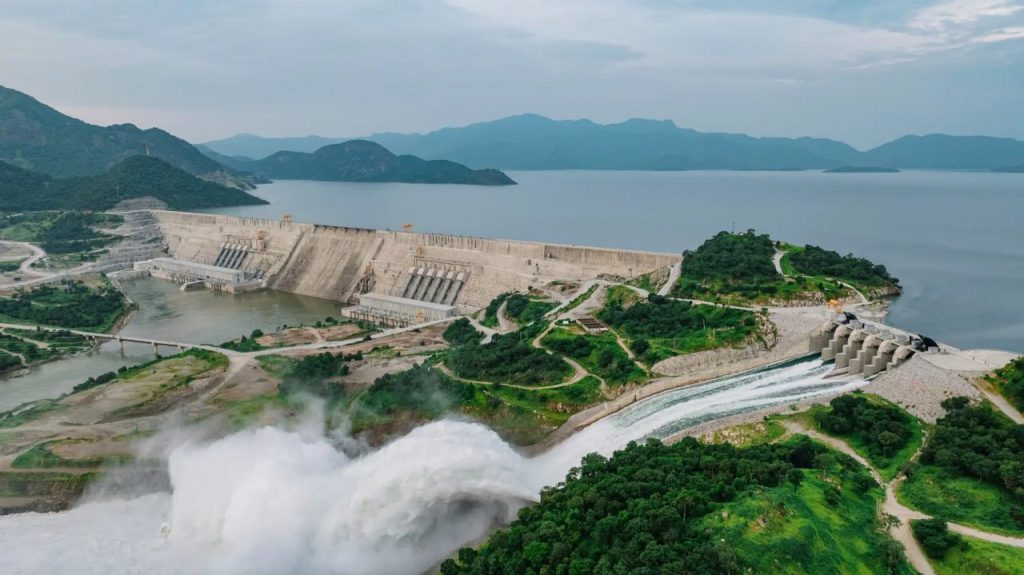
- Ethiopia’s sovereign right to harness its hydropower resources must be respected, particularly given the basin’s high rainfall, limited irrigation potential, and substantial untapped hydroelectric capacity. The Grand Ethiopian Renaissance Dam (GERD), now operational at approximately 5,250 MW, exemplifies non-consumptive use: power generation with minimal permanent water loss compared to downstream evaporation-heavy reservoirs.
- Water conservation is a shared imperative in a climate-stressed region facing population growth and rising food demands. Both nations stand to gain from reducing avoidable losses—such as high evaporation from Lake Nasser (estimated at 10-16 billion cubic meters annually, or 20-30% of Egypt’s Nile allocation) and inefficiencies in traditional irrigation systems, and unilateral basin transfer.
These acknowledgments shift the dialogue from perceived threats to collaborative problem-solving.
Technical Proposals for Mutual Benefit:
In a spirit of brotherhood, negotiations can center on practical, engineering-driven proposals that maximize benefits for both sides while minimizing risks:
- Water-Saving Investments and Technology Transfer: Egypt could support Ethiopia’s adoption of efficient irrigation technologies (drip systems, precision agriculture) for its modest irrigation expansion—ensuring withdrawals remain negligible relative to annual flows.
- Compensator Mechanisms for Confidence-Building: If Egypt seeks assurances against additional major dams to preserve flow predictability, Ethiopia could be compensated through Egyptian-backed alternative energy projects—such as financing nuclear, solar, or wind capacity equivalent to remaining Blue Nile hydropower potential. This offsets foregone generation while advancing Ethiopia’s energy diversification and regional grid integration.
The Power of a Renewed Mindset:
The Nile dispute persists not due to water scarcity—technical assessments confirm the basin holds sufficient resources for equitable, sustainable use—but due to entrenched political narratives. By sidelining recriminations and emphasizing brotherhood, leaders can foster public narratives of partnership: Egyptians viewing Ethiopian development as complementary (providing regulated flows and clean energy exports), and Ethiopians seeing Egyptian expertise as vital for efficient utilization.
Such a shift enables structured negotiations under frameworks like the Nile Basin Initiative, potentially with neutral facilitation (e.g., U.S. mediation interest noted in recent reports, Involving Israeli government for unbiased technical support, Calling African Union and other recognised organizations as observer). Confidence-building starts small: joint technical committees for data sharing, pilot conservation projects, and transparent monitoring.
Toward Enduring Prosperity : Basin-Wide Efficiency Projects
Ethiopia and Egypt are bound by the Nile’s inexorable flow—no separation is possible. In a cooperative spirit, the river becomes a symbol of shared destiny: reliable hydropower for Ethiopia’s growth, secure water for Egypt’s survival, and collective strength against climate challenges. In this regard, a bilateral accord between Ethiopia and Egypt could serve as a powerful catalyst for broader regional initiatives, focusing on practical measures to minimize water losses and enhance the Nile’s overall productivity.
Key opportunities include :
1) Reviving and adapting long-standing concepts such as the Jonglei Canal to reduce massive evaporation in the Sudd swamp—one of the world’s largest wetlands—where a significant portion of the White Nile’s flow (estimates suggest around 50% or more in some sections) is lost to evaporation and transpiration annually. By channeling water more efficiently through or around these losses additional billions of cubic meters could reach downstream users without increasing upstream abstractions.
2) Ethiopia and Egypt could also collaborate directly on reducing evaporation from Lake Nasser, which loses an average of 10–16 billion cubic meters per year (roughly 20–30% of Egypt’s Nile allocation), due to its vast, shallow, and hot surface area. Modeling shows that upstream high-elevation storage in cooler Ethiopian highlands loses far less to evaporation than shallow, hot lowland reservoirs like Nasser. Targeted, innovative measures offer substantial gains:
2.1. Deploying floating photovoltaic (FPV) panels over high-evaporation zones. Studies show that covering portions of the lake (e.g., 25–50% of the surface) could save 2–9 billion cubic meters annually while generating massive renewable energy—up to hundreds of terawatt-hours per year—benefiting both nations through shared clean power and reduced evaporation.
2.2. Optimizing reservoir levels and operations, including lowering effective water levels in Lake Nasser to decrease its exposed surface area, particularly in shallower expanses where evaporation rates are highest (up to several times greater than in deeper central areas).
2.3. Prioritizing additional storage in upstream Ethiopian highlands, where cooler climates, deeper, narrower reservoirs, and lower temperatures result in far less evaporation compared to the arid, shallow Lake Nasser. Building and jointly operating more such dams would allow better seasonal regulation—storing excess wet-season flows in low-loss upstream sites—freeing up equivalent volumes downstream while protecting against droughts.
These joint efforts would not only conserve precious water but also unlock additional arable land potential in Egypt and South Sudan (by reducing flooded or evaporative zones) and support food security across the basin amid rising global food prices and population pressures. By emphasizing engineering collaboration, data sharing, and co-management of reservoirs, Ethiopia and Egypt can demonstrate how integrated basin development turns shared challenges into mutual advantages, paving the way for sustainable prosperity for all Nile riparians.
Conclusion
By prioritizing technical innovation over historical animosity, the two nations can forge a strategic, binding agreement that not only resolves the Nile question once and for all but also sets a powerful precedent for basin-wide collaboration—unlocking vast fertile lands for sustainable agriculture, abundant clean energy through optimized hydropower and renewables, regional economic integration, and, above all, lasting peace that endures for generations to come.
This vision is not a distant dream but a tangible possibility grounded in today’s realities. The river’s annual flow remains sufficient to meet the reasonable, growing needs of both peoples when managed with efficiency, transparency, and mutual respect. Recent diplomatic signals – most notably the February 2026 reports of Egypt’s conditional willingness to support Ethiopia’s Red Sea access in exchange for flexibility on Nile negotiations – demonstrate that pragmatic pathways are actively being explored, even amid complexities and caveats. Coupled with renewed international interest (including U.S. mediation offers) and ongoing Nile Basin Initiative engagements, such as recent ministerial meetings emphasizing consensus and cooperation, these developments affirm that meaningful progress is within reach when leaders choose dialogue over deadlock.
The importance of seizing this moment cannot be overstated. A lasting Nile deal would transform a source of perceived existential threat into a cornerstone of shared security and prosperity, reducing the risks of escalation, fostering trust across the Horn and North Africa, and inspiring other transboundary basins worldwide. Failure to capitalize on these openings risks perpetuating cycles of mistrust, resource underutilization, and vulnerability to climate shocks—outcomes neither nation can afford in an era of rising populations, food price pressures, and environmental uncertainty.
It is therefore incumbent upon the politicians of both countries to rise above short-term posturing and champion bold, forward-looking negotiations rooted in technical facts and equitable principles. The academic elite, engineers, hydrologists, economists, and legal scholars must intensify collaborative research, joint modeling, and evidence-based proposals to depoliticize solutions and build confidence. Above all, the people of Ethiopia and Egypt—whose lives and futures are intertwined by this ancient river—deserve leaders who promote narratives of brotherhood, shared destiny, and mutual benefit rather than fear or division.
To the governments, civil society, international partners, and all interested parties: harness these emerging chances without delay. Initiate or revive structured, technical-focused talks—perhaps under neutral facilitation or through expanded Nile Basin Initiative mechanisms—prioritizing data sharing, joint conservation pilots, and win-win projects like evaporation reduction and coordinated reservoir operations. The Nile has sustained civilizations for millennia; now is the time for its riparians to sustain each other through wisdom, innovation, and goodwill. A historic agreement is possible—let us make it inevitable.
ዌብሳይት፡ https://addisreporter.com/
ኢሜል፡ info@addisreporter.com
ቴሌግራም፡ https://t.me/addisreporter2
X፡ https://x.com/amejuju?s=21
https://web.facebook.com/addisreporternews
ስልክ ቁጥር፡ +251116393393