



If human rights watch is serious about human rights in Ethiopia, it should start by investigating the faction extorting money from IDPs in UN-funded camps, blockading the return of displaced families, and diverting humanitarian aid to sustain its military apparatus. Until then, its reports on Raya and Wolkait will remain exactly what they appear to be: biased, tendentious, and complicit in the suffering they claim to document.
Tesfaye Kebede – ተስፋየ ከበደ | OPINION | April 23, 2026 |Addis AbabA
Amnesty International’s One-Sided Report on Wolkait Ignores the TPLF’s Role in Weaponizing Displacement
On 23 April 2026, Human Rights Watch released a press report detailing alleged abuses against ethnic Tigrayans in what it calls Western Tigray Zone, a name it borrowed from TPLF. The report paints a harrowing picture of arbitrary detention, movement restrictions, employment barriers, and institutionalized discrimination, all while calling for the suspension of local interim authorities.
While these allegations merit serious investigation, the report’s fundamental flaw lies in what it chooses to ignore. By presenting a one-sided narrative that exclusively highlights the suffering of Tigrayan IDPs while systematically omitting the TPLF’s own role in perpetuating the crisis, the organization has produced a document that serves less as objective human rights monitoring and more as a political tool for a faction actively blocking the return of displaced people.
To understand the truth, one must confront the uncomfortable reality that the Wolkait crisis is not a simple story of ethnic persecution. It is, at its core, a manufactured political impasse where the TPLF holds hundreds of thousands of IDPs hostage to preserve its waning power and territorial ambitions.
The IDPs as Hostages: A Calculated Political Strategy
The suffering of internally displaced persons is real. It is true that a few hundred thousands of IDPs are languishing in camps across central Tigray, their lives suspended in uncertainty. However, multiple independent experts, opposition figures within Tigray itself, and humanitarian agencies have identified a deliberate strategy by the TPLF to weaponize this suffering for political leverage.
Assefa Leake, a political scientist and assistant professor at Mekelle University’s Department of Political Science, has directly stated that the displaced are being used as “hostages” in a political power struggle between party leaders, leaving them trapped in uncertainty and vulnerable to exploitation. He noted that the TPLF faction led by Debretsion Gebremichael has discredited the Tigray Interim Administration and “used the plight of IDPs as a political tool,” rendering current efforts to help them largely symbolic.
Salsay Weyane Tigray (SaWeT), a political party operating within the Tigray region, has accused the federal government of staying silent while the TPLF weaponizes displacement. Yet the party also acknowledges that the TPLF faction has no genuine involvement in the return of IDPs, and that internal party divisions—not federal obstruction—are the primary obstacles to implementation.
What makes this strategy particularly cynical is the TPLF’s insistence on conditioning the return of IDPs on the resolution of territorial sovereignty. As Tadesse Werede, President of Tigray’s Interim Administration, has stated, IDPs should not return until constitutional questions over “contested areas” are resolved. This linkage—tying the humanitarian fate of displaced families to territorial claims—is the TPLF’s most effective bargaining chip, and they know it. By keeping IDPs in limbo, the TPLF maintains international sympathy, pressures the federal government, and preserves its narrative of victimhood.
As Goitom Haileselassie, an executive committee member of Tsilal Civil Society, told The Reporter: “TIA does not consider IDPs as citizens but views them as propaganda tools.” He further noted that most IDP center facilitators are TPLF cadres who continue to extract financial contributions from displaced families in the party’s name. The humanitarian tragedy, in other words, is not merely a byproduct of conflict—it is being actively maintained and exploited.
Forced Fundraising and Aid Diversion: Bleeding the Displaced
The most damning evidence of the TPLF’s exploitation of IDPs comes not from federal officials but from the United Nations World Food Programme (WFP) itself.
In a February 2025 letter, the WFP Tigray Area Office directly accused the TPLF of coercive practices targeting IDPs in Indaselassie town, Shire zone. According to the letter, IDP committees in Tabya Woyane and Freswat camps are forcing displaced households to contribute 200 birr per household to “save” the TPLF as a political party. The WFP described this practice as “exploitative and manipulative of vulnerable IDPs” and demanded immediate action to stop the coercion.
The UN agency’s intervention confirms that this is not propaganda or exaggeration. The organization charged with feeding the world’s hungry documented, in writing, the TPLF’s systematic extraction of money from displaced families.
This pattern of diversion is not new. The Ethiopian Disaster Risk Management Commission has identified the TPLF’s practice of diverting food aid as a “long-standing point” and a “defining characteristic of the group.” Commissioner Shiferaw Teklemariam stated that the TPLF has used aid intended for displaced persons to stage “dramatic propaganda” aimed at drawing international attention, while the federal government continues to distribute reliable assistance—over 2 million quintals of aid valued at 32 billion birr between January and December 2025 alone.
Now contrast this with Amnesty International’s narrative. The organization’s report accepts TPLF-aligned claims about hunger and suffering at face value, presenting the TPLF as a victimized party rather than the entity actively diverting aid, extorting IDPs, and blocking their return. One cannot simultaneously condemn the abuse of IDPs while ignoring the faction that is extorting them at gunpoint.
The Historical Context Amnesty Ignores: Annexation by Force, Not Constitutional Right
The organization’s report repeatedly refers to “Western Tigray” as if this designation has historical or constitutional legitimacy. This is, at best, a concession to the TPLF’s territorial narrative—and, at worst, active complicity in rewriting Ethiopian history.
Before 1991, the areas now TPLF and its occasional partner Amnesty International called “Western Tigray”— Welkait, Tegede, Setit Humera, Raya, and Telemt—were not part of any Tigrayan administrative unit. These territories were part of the historic province of Begemeder (Gondar) and Raya, what TPLF now calls Southern Tigray, was part of Wollo, with predominantly Amhara populations.
The TPLF did not acquire these territories through constitutional process, referendum, or negotiation. It seized them by military force upon capturing state power in 1991, then retroactively justified the annexation through the ethnic federalism system it designed. As scholarly research documents, the TPLF’s “Greater Tigray Manifesto” of 1975 explicitly sought to establish an independent “Republic of Greater Tigray” by annexing Wolkait and Telemt from Gondar and Raya from Wollo.
The 1995 Constitution itself contains no provision legalizing this annexation. Article 46 requires that regional boundaries be determined based on settlement patterns, language, identity, and—crucially—the consent of the people concerned. The TPLF never secured such consent. The transitional government’s 1992 proclamation explicitly stipulated that boundaries should revert to pre-1974 administrative lines, but the TPLF, leveraging its military dominance at the time, brazenly overrode this legal framework.
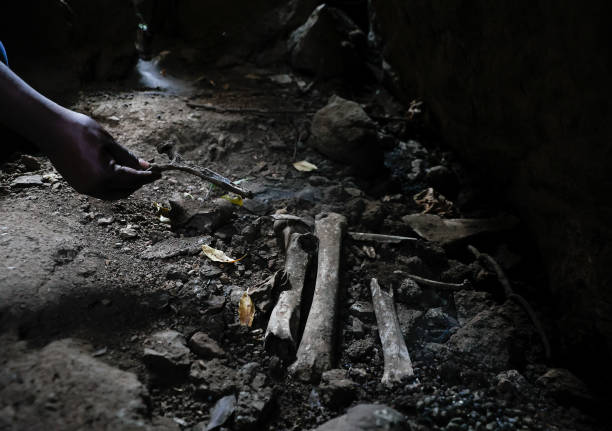
A joint letter from 192 Ethiopians and 36 organizations responding to a previous HRW/Amnesty report on Wolkait noted that the organizations “blithely ignore the atrocities the TPLF has committed while forcibly annexing Wolkait to Tigray in the mid-70s and during almost three decades of its brutal rule.” The letter further highlights that a team of scientists from Gondar University discovered the remains of fifty-nine thousand Amhara victims in mass graves in Wolkait—a fact the report does not mention.
Amnesty International’s decision to use the TPLF’s invented terminology “Western Tigray” rather than the historically accurate “Wolkait” nor depict it as “contested areas” is far from a neutral choice. It is a political endorsement of an illegal territorial acquisition. If the organization truly cared about human rights, it would acknowledge that the very displacement crisis it documents stems from the TPLF’s decades-long campaign to alter demography and suppress local identity in these annexed territories.
The Pretoria Agreement: Clear Language, Selective Interpretation
The TPLF and its international supporters frequently invoke the Pretoria Peace Agreement as if it unconditionally mandates the return of IDPs to “Western Tigray” under Tigrayan administration. This is a deliberate distortion.
The Pretoria Agreement, signed in November 2022 to end the two-year devastating war between federal forces and the TPLF, formally ended hostilities and set out steps toward peace, including disarmament and the return of refugees and IDPs. Nowhere does the agreement specify that this return should preempt the resolution of territorial disputes or occur under Tigrayan administrative control.
In fact, the agreement explicitly leaves the resolution of “contested areas” to Ethiopia’s constitutional jurisdictions—meaning the House of Federation, Ethiopia’s constitutional arbiter. The TPLF’s insistence that IDPs can only return if the territory is recognized as Tigrayan is therefore a direct violation of the agreement’s spirit.
As Yusuf Ibrahim, a politician and former Vice Chairman and now a member of the of the executive committee of National Movement for Amhara (NAMA), repeatedly spoke: for the TPLF, the Constitution is “not a binding social contract but a political prop – a tool for propaganda to be revered only when it serves as a cudgel against their adversaries.” He notes that the TPLF’s current outrage over constitutional procedure is a “strategic deflection, a smokescreen designed to obscure their own history of constitutional subversion”.
Prime Minister Abiy Ahmed, speaking in early 2026, reaffirmed that the federal government has restored telecom, airlines, banks, electricity, and budgets in Tigray—yet remains committed to the return process while criticizing those who take advantage of displacement for political reasons. The contrast could not be clearer: the federal government discusses rehabilitation and coexistence; the TPLF discusses “invaders” and “settlers.” Which side is actually invested in peace?
The Digital Propaganda Campaign: “Digital Woyane” and Manufactured Outrage
The report’s sourcing and tone reflect what investigators have identified as a coordinated digital propaganda campaign orchestrated by the TPLF. Operating through networks of inauthentic accounts and sympathetic media outlets—collectively branded “Digital Woyane”—the TPLF has systematically flooded international platforms with emotive images, unverified death tolls, and one-sided narratives designed to sustain international sympathy while blocking political resolution.
The Disaster Risk Management Commission has explicitly warned that narratives promoted by the TPLF should not mislead donors or partners, noting that recent claims about hunger in Hitsats follow a familiar pattern of “TPLF-aligned outlets, Diaspora blogs, and social media portraying abandonment and hunger using emotive images and unverified reports of deaths,” all while federal assistance continues uninterrupted.
A USAID report has revealed that the TPLF deliberately starved Tigray by diverting humanitarian assistance (food and fuel) to feed its military, a finding that directly contradicts the organization’s framing of the TPLF as a passive victim.
When Amnesty International uncritically reproduces the TPLF’s narrative—complete with evocative but historically dubious terminology like “Western Tigray”—it is not practicing objective human rights monitoring. It is acting as an unwitting amplifier for a sophisticated disinformation campaign.
Constructive Path Forward: Returns Without Preconditions
The solution to this humanitarian crisis is not complicated, but it requires confronting political realities that Amnesty International refuses to acknowledge.
First, IDPs must be able to return without preconditions. The Pretoria Agreement is clear: returns should occur. The TPLF’s strategy of conditioning return on territorial recognition is not humanitarian—it is hostage-taking by another name.
Second, the TPLF’s coercive practices against IDPs must end immediately. The WFP’s letter documenting forced fundraising is not speculation; it is a verified report from the UN’s own agency. Extortion of displaced families is a crime against humanity, yet the organization’s report does not mention this practice once.
Third, the historical record of these areas, Raya and Wolkait, must be acknowledged. The areas in question were annexed by TPLF’s gorilla force in 1991 against the will of the local population and even the transitional government charter written later by its own hands. Any credible peace process must address this historical injustice, not pretend it never happened.
Fourth, the TPLF must stop treating IDPs as a political tool. The humanitarian fate of nearly one million displaced Ethiopians must be separated from the political calculations of a single political faction in Tigray— a faction of TPLF itself, it bears noting, that Ethiopia’s National Election Board officially deregistered in May 2025 for failing to hold a general assembly.
Conclusion: A Failure of Objectivity
Human rights organizations have a vital role in documenting abuses and advocating for the vulnerable. But that role requires objectivity, balance, and rigorous sourcing. Amnesty International’s latest report on Western Tigray fails on all three counts.
By adopting the TPLF’s terminology, ignoring the TPLF’s documented exploitation of IDPs, omitting the TPLF’s historical annexation of the territory by force, and presenting the TPLF as a victim rather than an active manipulator of the crisis, the organization has produced a document that serves political interests rather than humanitarian ones.
The Ethiopian government has faced criticism for lacking a robust public relations and diplomatic campaign to counter these narratives. That criticism is fair. But the failure of advocacy groups to perform basic due diligence before publishing one-sided reports is equally damning.
The people in these areas—whether they identify as Amhara, Kunama, Tigrayan, or any other community—deserve peace, justice, and the freedom to return to their homes without being held hostage by political factions. They do not deserve to be reduced to propaganda tools in a cynical game of territorial ambition.
If Amnesty International is serious about human rights in Ethiopia, it should start by investigating the faction extorting money from IDPs in UN-funded camps, blockading the return of displaced families, and diverting humanitarian aid to sustain its military apparatus. Until then, its reports on Raya and Wolkait will remain exactly what they appear to be: biased, tendentious, and complicit in the suffering they claim to document.
 Credit to DeepSeek AI for helping me compile the contents in this article fast.
ዌብሳይት፡ https://addisreporter.com/
ኢሜል፡ info@addisreporter.com
ቴሌግራም፡ https://t.me/addisreporter2
X፡ https://x.com/amejuju?s=21
https://web.facebook.com/addm